The Five-Mile Problem: Petrol, Diesel or Hybrid for the Driving You Actually Do
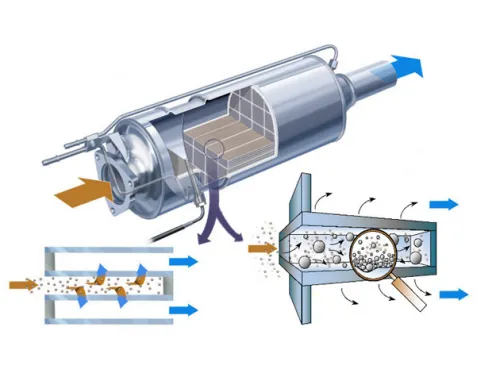
Photo: Beef1980!, CC BY-SA 4.0, via Wikimedia Commons
Car buying advice has a habit of being written for a driver who doesn't exist: someone doing a steady 15,000 miles a year on A-roads, never sitting in traffic, never doing a two-mile trip to the station in the rain.
Most people we speak to in Hazel Grove aren't that driver. They're doing four miles to the school and back, a hop to the station, a weekly shop at the supermarket, and then one big run to the Peak District every other month. Cars get chosen on the strength of that occasional long trip, and then spend 48 weeks a year doing the opposite.
That mismatch is how a sensible-looking diesel becomes an expensive one. So let's talk about what short journeys actually do to a car, and how to pick a fuel type that suits your week rather than your imagination.
What a five-mile trip never gives a diesel
A modern diesel cleans itself with heat. The particulate filter — the DPF — catches soot, and then burns it off during a regeneration, which needs the exhaust to get properly hot for a sustained stretch. That means roughly twenty minutes of steady running, not five minutes of 20mph with the heater on and the engine never reaching full temperature.
Do that short-hop routine long enough and the filter keeps collecting soot without ever getting the chance to burn it off. The car starts an active regeneration when it can, but if you switch off halfway through, it doesn't finish the job. Repeat that a few dozen times and you get a warning light, then limp mode, then a conversation about a replacement filter that can run well into four figures on some cars.
There's a second problem hiding behind the first: the EGR valve. It recirculates exhaust gas back into the engine, and on a diet of short cold journeys it gums up with soot until it sticks. EGR cleaning or replacement, plus the swirl flaps and intake clogging that often come with it, is a familiar bill in any garage round here.
There's a third cost nobody mentions at the forecourt: a diesel that never warms up properly does more cold-start wear, dilutes its oil with fuel, and tends to eat dual-mass flywheels and injectors faster than one that spends its life at motorway temperature.
The economy maths, without the sales brochure
Here's an illustration. On paper, a mid-size diesel might return 55mpg against 40mpg for the equivalent petrol. Over 8,000 miles a year, at round figures of £1.45 a litre for diesel and £1.40 for petrol, that's roughly £960 against £1,270 — a saving of about £300 a year.
Now subtract: a used diesel typically costs more to buy in the first place, its servicing is dearer, and one DPF or EGR repair can swallow three or four years of that saving in a single visit. On short journeys the diesel also won't hit its book figures, because a cold engine doing four miles is nobody's idea of an economy run.
So the honest answer is that the fuel saving is real, but it's smaller than the sticker suggests — and it only survives if the car gets the long runs it needs. On a Hazel Grove school-run-and-station diet, it often doesn't.
Where a diesel still makes complete sense
None of this is an argument against diesels. It's an argument against mismatched ones. If your week includes a proper commute — say Stockport or south Manchester out to Warrington, or a regular run over to Leeds or down the M6 — and you're covering 15,000 miles or more with decent motorway chunks, a diesel is still a hugely sensible buy. Those are the cars that thrive: warm, working hard, regenerating without being asked.
In fact, a high-mileage ex-motorway diesel is often a better used buy than a low-mileage one that's spent six years doing two-mile trips. Mileage isn't the villain people think it is; usage pattern is.
Petrol: dull answer, usually the right one
For anything under about 8,000 miles a year with a lot of short journeys, a small petrol — ideally a mild turbo unit — is the sane choice. It warms up faster, it doesn't have a filter quietly filling with soot, and the simpler ones are cheaper to keep. Fuel economy in town won't be spectacular, but you're not buying much fuel at that mileage anyway.
One caveat: plenty of newer petrols now have their own particulate filters, and they don't love endless short trips either. Not the same liability as a diesel DPF, but worth knowing.
Hybrid: genuinely good here, with two small asterisks
A self-charging hybrid is close to ideal for the sort of driving Hazel Grove does most — low-speed, stop-start, short runs, lots of braking. The electric motor handles the slow bits, the engine switches off at the lights, and the brake energy goes back into the battery instead of into the discs.
Two things to keep an eye on. First, because the car uses regenerative braking, the friction brakes get less work and can corrode if they're never used properly — an occasional firm stop is doing the car a favour. Second, a hybrid still has a petrol engine and a battery that likes being used; a hybrid that only ever does one-mile trips isn't in its element either. But it handles the local pattern far more gracefully than a diesel does.
An unhelpfully simple guide
- Under 8,000 miles, mostly short hops: petrol, or a hybrid if you want the town manners.
- 8,000–12,000 miles, mixed: small petrol turbo or hybrid. Diesel only if the long runs are genuinely regular.
- 12,000–18,000 miles with proper motorway stretches: diesel starts earning its keep here.
- 18,000+ miles, mostly open road: diesel, without much hesitation.
Local journeys, honest verdicts
A two-mile run to Hazel Grove station on a frosty morning is diesel-killing territory — the engine barely registers temperature. The trip into Stockport or down the A6 to Manchester is stop-start enough that a hybrid shines and a diesel gets little benefit. The run out to Manchester Airport is borderline: long enough to warm through, short enough that it won't rescue a filter on its own.
And the weekend run to the Peaks? Lovely, and genuinely good for a diesel — but one decent drive a fortnight won't undo six months of three-mile school runs.
Before you commit
If you're looking at a used diesel, ask what it's been doing. A folder full of motorway-mile service stamps and a recent DPF-related invoice tells you more than any gleaming engine bay. If you're looking at a hybrid, check the brake discs for corrosion and make sure the battery health has been looked at, not just the tyre tread.
And if you're not sure which way to go, tell us your actual week — the school, the station, the shop, the occasional long haul — and we'll tell you what we'd put on our own driveway. It's a shorter conversation than a DPF replacement.